

Hi there! How can we help you today?
Inclusive Participatory Policymaking for Rural Women and Youth in Kibaale District
-
Home
-
Inclusive Participatory Policymaking for Rural Women and Youth in Kibaale District

Inclusive Participatory Policymaking for Rural Women and Youth in Kibaale District
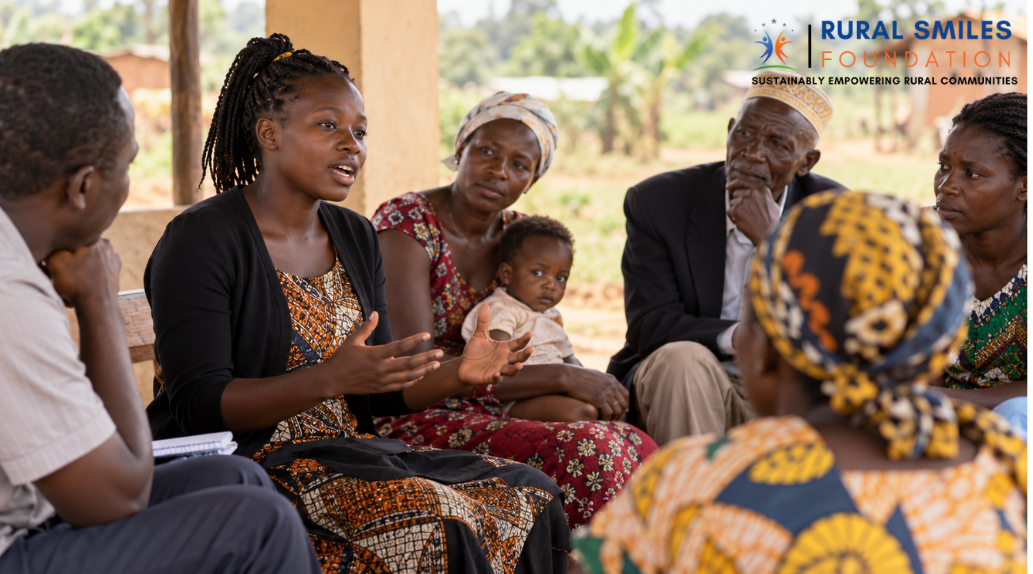
Strengthening community influence in local decision making
Rural Smiles Foundation is working with rural women, young people, displaced people, community leaders, civil society actors and local government institutions in Kibaale District to strengthen meaningful participation in decisions that affect community life.
The project responds to a practical challenge: having a legal right to participate does not automatically mean that everyone has an equal opportunity, confidence or pathway to influence decisions. Uganda's Constitution recognises citizens' right to participate in the affairs of government and establishes decentralisation as a mechanism for strengthening participation and democratic control in local decision-making. The Local Governments Act similarly provides for democratic participation and affirmative action for groups that have experienced marginalisation.
Yet participation can still be constrained by limited access to information, economic and mobility barriers, unequal confidence in formal public forums, social and cultural norms, and limited opportunities for sustained engagement between communities and decision-makers. The challenge is particularly important in a district of 237,649 people. According to the Uganda Bureau of Statistics National Population and Housing Census 2024, Kibaale District has 124,394 female residents and 113,255 male residents. Ensuring that local governance processes can meaningfully hear different community perspectives is therefore important for responsive and inclusive local development.
Our project is creating practical mechanisms through which communities can identify priorities, develop proposals, engage directly with decision-makers and follow up on issues raised through participatory processes.

From consultation to meaningful participation
Community participation can become tokenistic when people are invited to meetings but have little information beforehand, lack confidence to contribute, or have no mechanism for following what happens after the meeting.Our approach seeks to move beyond participation as attendance.
We are building a structured process in which participants can first understand the issues and decision-making systems, deliberate within safer community spaces, formulate priorities, engage with public institutions and remain involved in monitoring what follows.The intention is to strengthen the quality of participation rather than simply increase the number of people attending public meetings.
Developed through the Inclusive Democracy Accelerator
The initiative was developed through the Inclusive Democracy Accelerator of People Powered, a global practice-oriented programme that helps civil society organisations and governments improve participatory processes so that historically marginalised groups can participate more meaningfully.
Rural Smiles Foundation participated in the Accelerator in partnership with Kibaale District Local Government.Through the programme, we have been refining a locally appropriate participatory model addressing barriers affecting rural women, youth and displaced people through approaches including safe spaces for civic dialogue, localised policy discussions, peer facilitation and accessible participation mechanisms.The Accelerator combines mentoring, practical learning, peer exchange and participatory-design tools, with participants subsequently implementing and adapting their action plans within their communities.
Who the project works with
Rural women
Women are central to the project because decisions concerning health services, household livelihoods, land, education, social protection and community development have direct consequences for their lives. The project creates spaces where women can identify common priorities, strengthen their understanding of local decision-making processes and prepare collectively before engaging in broader forums involving public officials and other community stakeholders.
Youth and young community leaders
Young people are engaged not simply as beneficiaries but as contributors to local development and public decision-making.The project strengthens their understanding of local governance, civic rights, community organising, constructive advocacy and the processes through which community priorities can be communicated to relevant institutions.
Displaced and other marginalised people
The participatory model also considers people whose displacement, mobility, social status or other circumstances can make participation in conventional community structures more difficult.Designing participation around accessibility and inclusion helps reduce the risk that the people facing the greatest barriers remain outside processes intended to serve the wider community.
Community leaders and civil society
Grassroots organisations, community representatives, local leaders and civil society actors help mobilise communities, facilitate dialogue, identify emerging concerns and connect participants with existing community structures.
Local government institutions
District and lower local government representatives are critical to the process because meaningful participation requires pathways through which community priorities can reach the institutions responsible for planning, service delivery and public decision-making.Their participation enables communities to understand institutional processes while giving public officials direct access to community perspectives and proposed solutions.
How the project works
1. Building institutional and community ownership
We engage local government officials, community leaders and civil society stakeholders early in the process to establish a shared understanding of the objectives, roles and principles guiding participation.This helps create institutional ownership while reducing the risk of community engagement becoming an isolated civil society activity.
2. Safe-space community dialogues
Separate and accessible dialogue spaces provide women, youth and other participants with an opportunity to discuss concerns before entering larger deliberative forums.Participants identify issues affecting their communities, examine how those issues relate to local decision-making and begin developing possible responses.Creating these spaces is particularly important for participants who may be less comfortable speaking in conventional public meetings.
3. Civic knowledge and participatory leadership
Participants build practical knowledge of how local government works, where decisions are made, how citizens can participate, and how community priorities can be communicated constructively.Training and peer learning cover areas such as civic rights and responsibilities, facilitation, communication, community organising, policy engagement and monitoring.The emphasis is on giving participants tools they can continue using beyond a single project activity.
4. Localised policy labs and deliberative forums
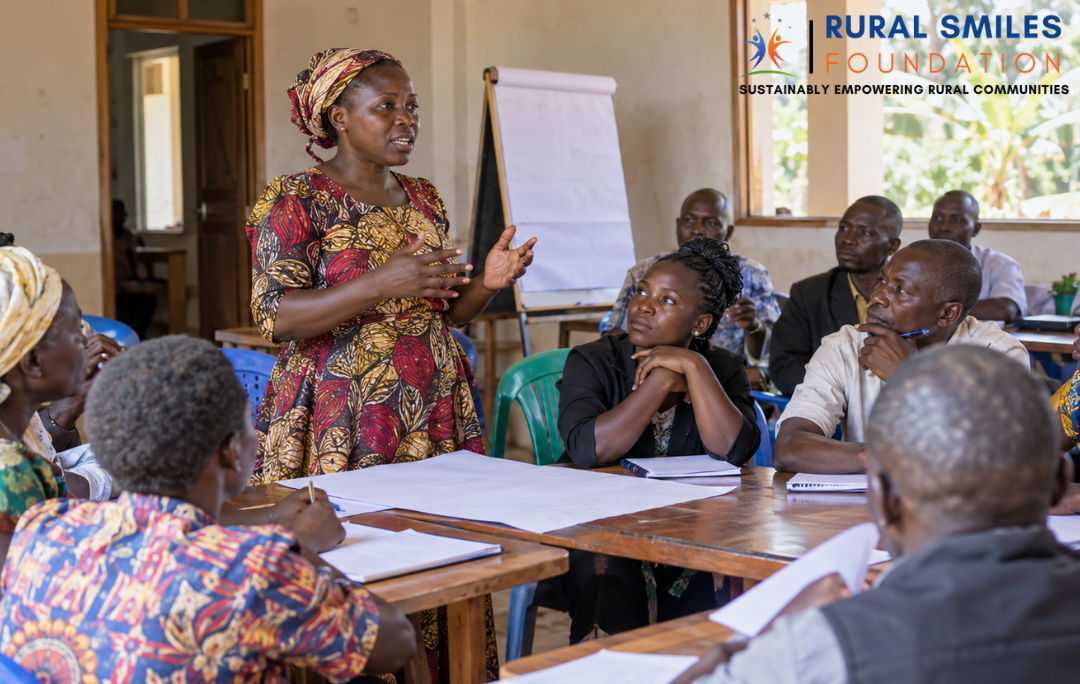
Community priorities are developed further through structured discussions involving citizens, civil society actors, community leaders and public officials.Rather than presenting officials with predetermined demands, participants examine problems, consider different perspectives and work toward practical recommendations.These spaces are intended to support collaborative problem-solving while ensuring that community members retain a meaningful role in defining the issues that matter to them.
5. Accessible and mobile participation
Not everyone can consistently attend physical meetings.The project therefore explores accessible participation mechanisms that can complement face-to-face engagement and enable community perspectives to be collected and shared more effectively.This approach is particularly relevant for rural communities where distance, transport costs, work responsibilities and other practical barriers can limit participation.
6. Community oversight and follow-up
Participation should not end when a dialogue closes.Community representatives and participating stakeholders are supported to follow issues raised during the process, maintain communication with relevant institutions and track commitments or recommendations emerging from the dialogues.This feedback loop is essential for strengthening accountability and maintaining community trust in participatory processes.
What we aim to achieve
By the end of the initiative, Rural Smiles Foundation seeks to contribute to:
- stronger participation of rural women, youth, displaced people and other underserved groups in local decision-making;
- improved civic knowledge and confidence among community participants;
- stronger and more constructive engagement between communities and local government institutions;
- community-generated recommendations that reflect lived priorities;
- more accessible and inclusive approaches to public participation;
- stronger mechanisms for following up community priorities after dialogue processes; and
- a locally tested participatory model that can inform similar work in other rural communities.
How we will know the approach is working
We will track both participation and the quality of participation. Our monitoring will examine who is participating, whether groups that normally face barriers are meaningfully represented, the issues communities identify, recommendations developed through the process, engagement by relevant public institutions, commitments generated and the extent to which participants remain involved in follow-up. We will also document lessons on what makes participation safer, more accessible and more influential for different groups. This allows the project to measure more than the number of meetings held or people attending them.
Building a model that can grow
The wider value of the initiative is not limited to one series of community dialogues in Kibaale District. Rural Smiles Foundation is using the experience to strengthen our broader approach to social inclusion, civic participation and community accountability. Lessons generated through the initiative are also informing how we think about responsible digital participation through SPACEUG, including ways technology can complement rather than replace face-to-face community engagement. Our longer-term goal is to strengthen practical models through which rural communities can participate consistently and meaningfully in decisions affecting their lives.
Our commitment
Inclusive governance requires more than opening a meeting to the public. It requires deliberate efforts to address the barriers that determine who can speak, whose knowledge is valued, who can reach decision-makers and whether communities can see what happens after their priorities are raised. Through this project, Rural Smiles Foundation is working with communities and local institutions to make participation more accessible, informed, constructive and accountable.
Interested in supporting inclusive civic participation and community-led governance?
We welcome collaboration with local governments, civil society organisations, research institutions, participatory democracy practitioners, development partners and funders interested in strengthening inclusive public participation in rural communities.
Share this service: